
As I stood in my cozy kitchen, the scent of simmering garlic and fresh radish enveloped me like a warm hug. This Vegan Korean Radish Soup, or Mu Guk, is a delightful journey into the world of comfort food, offering a nourishing bowl brimming with vibrant flavors. Featuring hearty daikon radish in a savory kombu-garlic broth, this recipe is a perfect union of simplicity and satisfaction. What I love most about this dish is how quickly it comes together—ready in just 30 minutes, it’s ideal for those frantic weeknights or a leisurely weekend lunch. Health-conscious yet deeply comforting, each bowl is a reminder that homemade food doesn’t have to be complicated. So, are you ready to ladle up some comfort in a bowl?
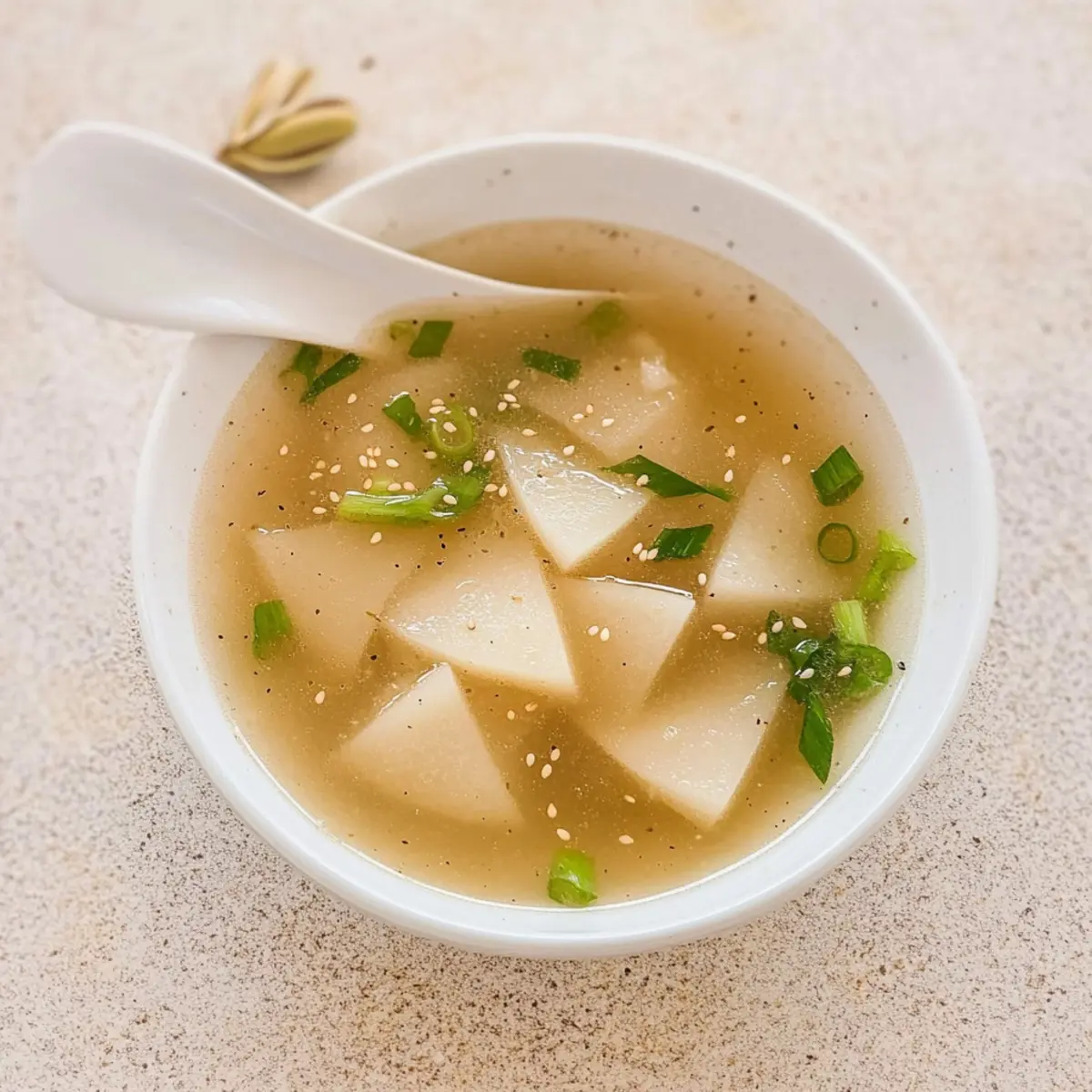
Why is Korean Radish Soup a Must-Try?
Quick and Easy: This recipe comes together in just 30 minutes, making it perfect for busy weeknights when you crave something warm and nutritious.
Vibrant Flavors: With the unique combination of daikon radish, garlic, and kombu, each spoonful bursts with flavor that dances on your palate.
Nourishing Comfort: It’s a light yet satisfying soup that nourishes your body and soul without weighing you down—ideal for health-conscious foodies.
Versatile Variations: Customize with your favorite veggies or even add a protein boost like tofu for a heartier meal that caters to all dietary needs.
Homemade Goodness: There’s something special about crafting a dish from scratch that beats takeout any day. Serve this alongside some Korean Spinach Side for a complete meal that feels indulgent without the guilt!
Korean Radish Soup Ingredients
• Perfect for a nourishing bowl of comfort.
For the Broth
- Korean Radish (Daikon) – The star of the dish, providing sweetness and essential flavor; stick to large varieties for optimal sweetness.
- Sesame Oil – This adds depth and nuttiness; you can substitute it with vegetable oil for a milder taste.
- Water or Vegetable Broth – Acts as the soup base, enriching the flavors; using vegetable broth enhances the overall taste.
- Kelp (Dashi Kombu) – Infuses umami and nutrition; optional, yet highly recommended for an authentic depth of flavor.
- Dried Shiitake Mushroom – Brings a savory richness to the broth; if you only have fresh mushrooms, they work but may alter the flavor.
For Seasoning
- Garlic – Fresh minced garlic adds aromatic depth; always opt for fresh over powdered for the best flavor.
- Gluten-Free Soy Sauce or Coconut Aminos – Provides essential saltiness and umami; coconut aminos are perfect for a soy-free alternative.
- Salt – Enhances all the flavors; remember to adjust based on your taste preferences.
- White Pepper (optional) – Adds a subtle heat to the dish; regular black pepper can serve as a substitute if needed.
For Garnish and Add-ins
- Green Onions – Sliced diagonally, they contribute fresh flavor and bright colors to your soup.
- Optional: Vegan “Beef” Alternative (tofu or seitan) – Adds protein while staying completely vegan; sauté it alongside the radish for added texture.
- Garnish: Sesame Seeds & Fresh Green Onion – Elevate your presentation and add delightful crunch to every bowl.
Step‑by‑Step Instructions for Korean Radish Soup
Step 1: Prepare Radish
Begin by peeling the Korean radish and slicing it into thin rounds before cutting each round into triangle shapes. Aim for uniform pieces to ensure even cooking. Set aside the prepared radish, as this will serve as the flavorful base of your Korean Radish Soup.
Step 2: Sauté Radish
In a large pot, heat 1 tablespoon of sesame oil over medium-high heat. Once the oil shimmers, add the diced radish and sauté for about 2-3 minutes, stirring occasionally, until the edges begin to soften and turn translucent. This step enhances the radish’s sweetness, laying the groundwork for your nourishing soup.
Step 3: Add Aromatics
Next, incorporate the sliced green onions into the pot, stirring them with the radish. Sauté for an additional 2-3 minutes, allowing the green onions to wilt and become fragrant. The combination of radish and onions creates an aromatic base that will enrich the flavors of your Korean Radish Soup.
Step 4: Combine Broth Ingredients
To the pot, add the kombu, dried shiitake mushrooms, and minced garlic. Pour in 4 cups of water or vegetable broth, and bring the mixture to a rolling boil. The broth is crucial for achieving that umami depth unique to Korean Radish Soup. Watch as it bubbles, releasing enticing aromas.
Step 5: Simmer
Once boiling, reduce the heat to low and let the soup simmer gently for 12-15 minutes. As it cooks, the radish should become tender and develop a lovely translucent appearance. Stir occasionally to ensure an even simmer, blending all the flavors beautifully.
Step 6: Season
After the radish is tender, stir in gluten-free soy sauce and salt to taste. Allow the soup to simmer for an additional 3 minutes, which helps meld all the ingredients together. Taste and adjust the seasoning as needed to create your perfect bowl of Korean Radish Soup.
Step 7: Serve
Ladle the hot soup into bowls and finish with a sprinkle of sesame seeds, a dash of white pepper, and extra green onions for garnish. This final touch not only enhances the presentation but also adds a delightful crunch. Enjoy your comforting Vegan Korean Radish Soup with a side of steamed rice or kimchi!
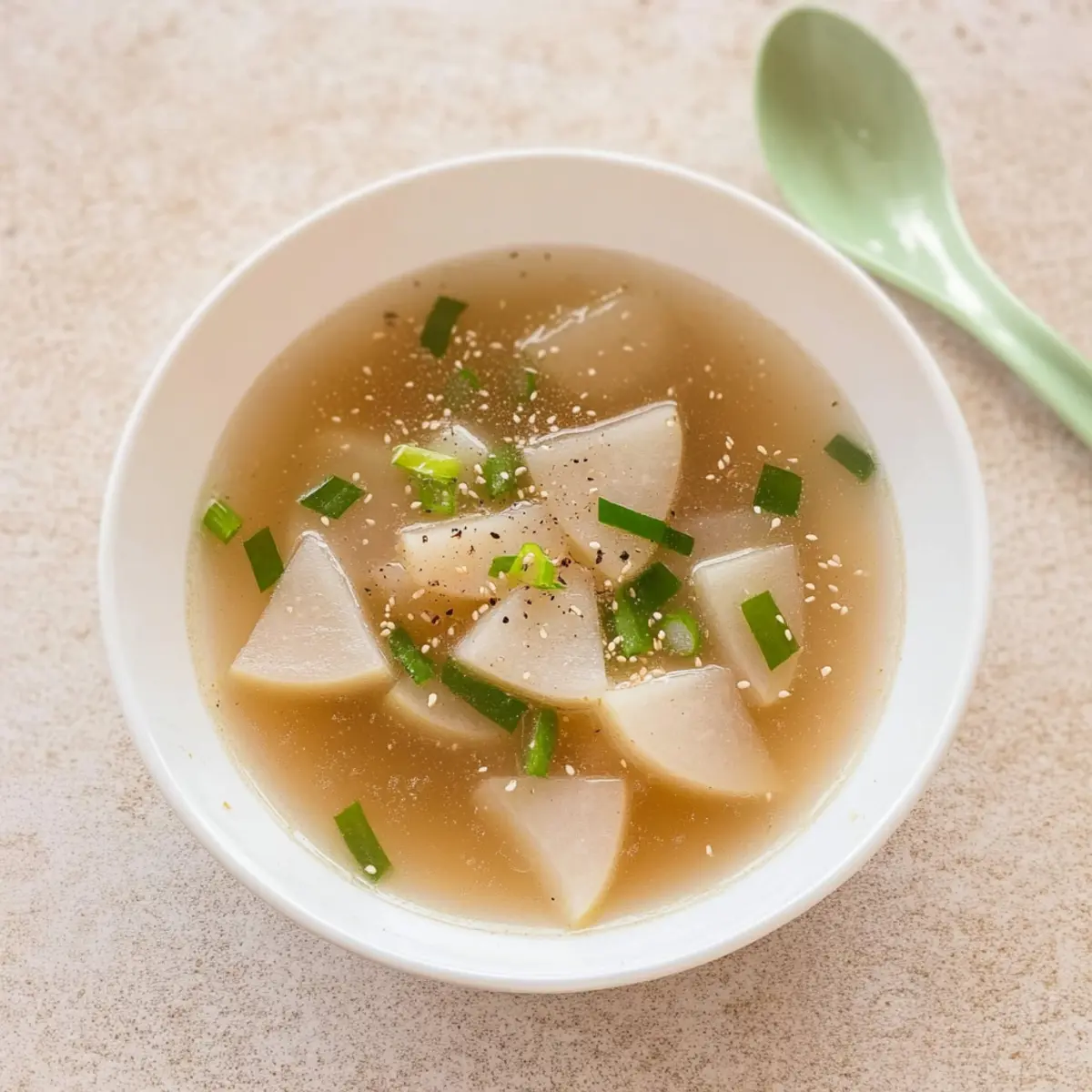
How to Store and Freeze Korean Radish Soup
Fridge: Store leftovers in an airtight container for up to 4 days. Allow the soup to cool completely before sealing to maintain freshness.
Freezer: For longer storage, freeze Korean Radish Soup in freezer-safe containers for up to three months. Portioning helps with easy reheating later.
Reheating: When ready to enjoy, thaw overnight in the fridge. Reheat gently on the stovetop or microwave until warmed through, stirring occasionally.
Serving Suggestions: For a nice touch, garnish with fresh green onions and sesame seeds after reheating.
Make Ahead Options
These Vegan Korean Radish Soup (Mu Guk) options are perfect for busy home cooks looking to save time during the week! You can pre-chop the Korean radish and green onions up to 24 hours in advance; store the radish in a bowl of water in the fridge to prevent browning, while the green onions should be tightly wrapped. The broth can also be prepared and refrigerated for up to 3 days—just combine the kombu, dried shiitake mushrooms, and garlic in advance. When you’re ready to serve, simply heat the broth, sauté the prepared radish and green onions for a few minutes, and finish by adding the broth, seasoning it to taste. You’ll have a comforting, homemade soup ready in no time!
What to Serve with Vegan Korean Radish Soup (Mu Guk)
Elevate your bowl of warmth with perfect pairings that complement the soothing flavors of this delicious vegan soup.
- Steamed Jasmine Rice: This fluffy and fragrant rice provides a gentle background for the savory soup, soaking up the delightful broth.
- Homemade Kimchi: The spicy, tangy crunch of kimchi adds a vibrant kick to your meal, balancing the broth’s warmth beautifully.
- Crispy Tofu Nuggets: These golden bites bring delightful crispness and protein, making for a satisfying contrast to the soup’s tender radish.
- Sautéed Seasonal Greens: Tossed in garlic and sesame oil, tender greens like bok choy or spinach will add freshness and color to your table.
- Miso Glazed Eggplant: The sweet umami of the miso glaze harmonizes with the soup’s flavors, creating a luxurious side that feels indulgent yet healthy.
- Rice Paper Rolls: Fill these delicate rolls with fresh vegetables and herbs for a light, refreshing balance to the warmth of the soup.
- Herbal Tea: A warm cup of green tea or chamomile enhances relaxation, offering a soothing finish to your nourishing meal.
- Light Fruit Sorbet: A small scoop of sorbet serves as a refreshing dessert, cleansing the palate after the rich and savory flavors of the soup.
- Cucumber Salad: With its crisp texture and subtle acidity, a simple cucumber salad brings a lovely freshness that complements the rich flavors beautifully.
Expert Tips for Korean Radish Soup
-
Select the Right Radish: Always choose large Korean radish for the perfect sweetness; smaller ones may taste too peppery, affecting the soup’s flavor.
-
Enhance Umami: Adding kombu is optional but highly recommended for achieving that signature umami flavor in your Korean Radish Soup; don’t skip it!
-
Fresh is Best: Use fresh minced garlic for a robust aroma; powdered garlic lacks the depth needed for a comforting soup.
-
Adjust Seasoning: Taste your soup before serving and adjust salt or soy sauce to suit your preferences; a little extra can really elevate the flavors.
-
Leftover Love: Korean Radish Soup can be stored in an airtight container for up to 4 days; reheat gently on the stovetop for the best texture.
Korean Radish Soup Variations & Substitutions
Feel free to personalize your Korean Radish Soup with these delightful twists that add flavor, texture, and nutrition!
-
Make it Spicy: Add sliced chili peppers for a kick. This small addition can transform your soup into a fiery delight that dances on your tongue.
-
Different Vegetables: Incorporate additional vegetables like carrots or zucchini for a more colorful soup. These veggies not only add vibrant pops of color but also boost the nutritional profile!
-
Noodle Additions: For heartiness, consider adding gluten-free noodles or rice cakes. This creates a more filling meal, ideal for those cozy nights when you want something extra comforting.
-
Creamy Option: Stir in a splash of coconut milk for a creamier texture. This twist provides richness that complements the savory flavors beautifully, making each bowl feel indulgent.
-
Herb Infusion: Add fresh cilantro or basil just before serving for a burst of freshness. The herbs elevate the soup with fragrant notes, turning your dish into a gourmet experience!
-
Protein Boost: Substitute traditional tofu with tempeh or seitan for a richer protein source. This swap enhances the texture and adds a satisfying component to each spoonful.
-
Citrus Zest: A squeeze of lime or lemon juice brightens the flavors. Just a hint can balance the savory broth and add a delightful zing to your soup.
-
Umami Enhancer: Toss in a few dried seaweed pieces for that extra umami kick. If you love the sea, this addition deepens the flavor and complements the kombu beautifully.
For more delicious pairings, serve this soup with some Korean Spinach Side or enjoy with a hearty bowl of Garlic Tomato Soup for a delightful, balanced meal that feels special any day of the week!
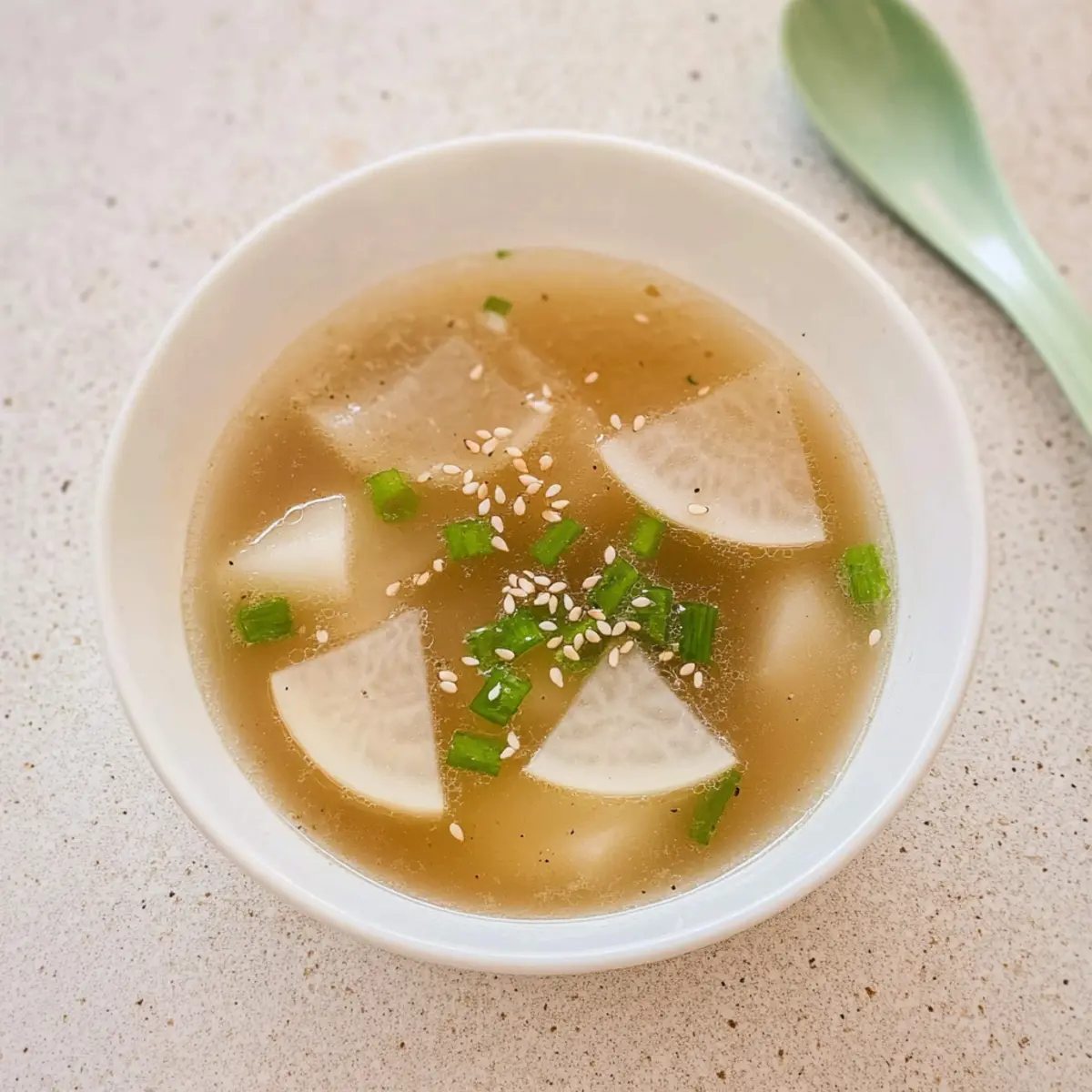
Korean Radish Soup Recipe FAQs
What type of radish should I use for this soup?
Absolutely! It’s essential to use large Korean radish (daikon) for optimal sweetness and flavor. Smaller, spicier varieties may overpower the broth. If you can, visit an Asian grocery store to find the right kind; it’s worth it!
How should I store leftovers of Korean Radish Soup?
You can store any leftovers in an airtight container in the fridge for up to 4 days. Allow the soup to cool completely before sealing to help maintain its freshness. Just remember to reheat gently on the stovetop or in the microwave when you’re ready for another bowl of comfort!
Can I freeze Korean Radish Soup?
Yes! To freeze, portion the soup into freezer-safe containers. It will keep well for up to three months. When ready to enjoy, thaw overnight in the fridge. Just reheat gently, stirring occasionally to ensure the flavors come back to life.
What if the soup is too salty for my taste?
Very! If you find that your Korean Radish Soup is too salty, you can add a bit of water or vegetable broth to dilute the flavor. Additionally, incorporating some extra diced radish can help balance the saltiness. Just allow the soup to simmer for a few more minutes after adding.
Is this soup suitable for allergy considerations, such as gluten intolerance?
Definitely! This Vegan Korean Radish Soup is naturally gluten-free when made with gluten-free soy sauce or coconut aminos. Always double-check your ingredients to ensure there are no hidden gluten sources, especially if you’re serving someone with a gluten allergy. Enjoy the comforting soup worry-free!
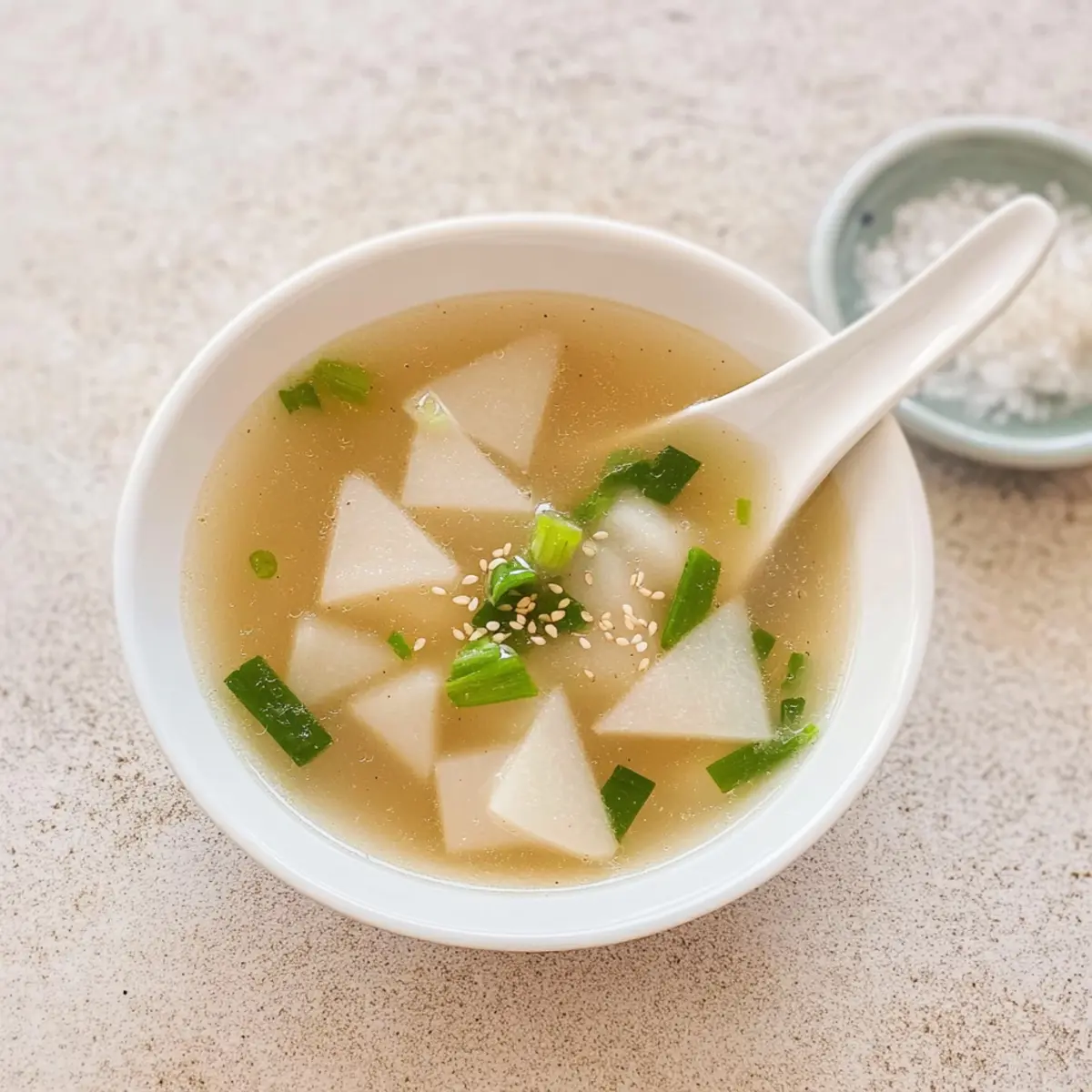
Hearty Korean Radish Soup: A Nourishing Vegan Delight
Ingredients
Equipment
Method
- Prepare Radish: Peel the Korean radish and slice it into thin rounds before cutting each round into triangle shapes. Set aside.
- Sauté Radish: In a large pot, heat sesame oil over medium-high heat. Add diced radish and sauté for 2-3 minutes until edges soften.
- Add Aromatics: Incorporate sliced green onions and sauté for another 2-3 minutes until fragrant.
- Combine Broth Ingredients: Add kombu, dried shiitake mushrooms, and minced garlic. Pour in water or vegetable broth. Bring to a boil.
- Simmer: Reduce heat to low and let soup simmer for 12-15 minutes until radish is tender.
- Season: Stir in gluten-free soy sauce and salt to taste. Simmer for an additional 3 minutes.
- Serve: Ladle soup into bowls and garnish with sesame seeds and green onions. Enjoy!
Leave a Reply