
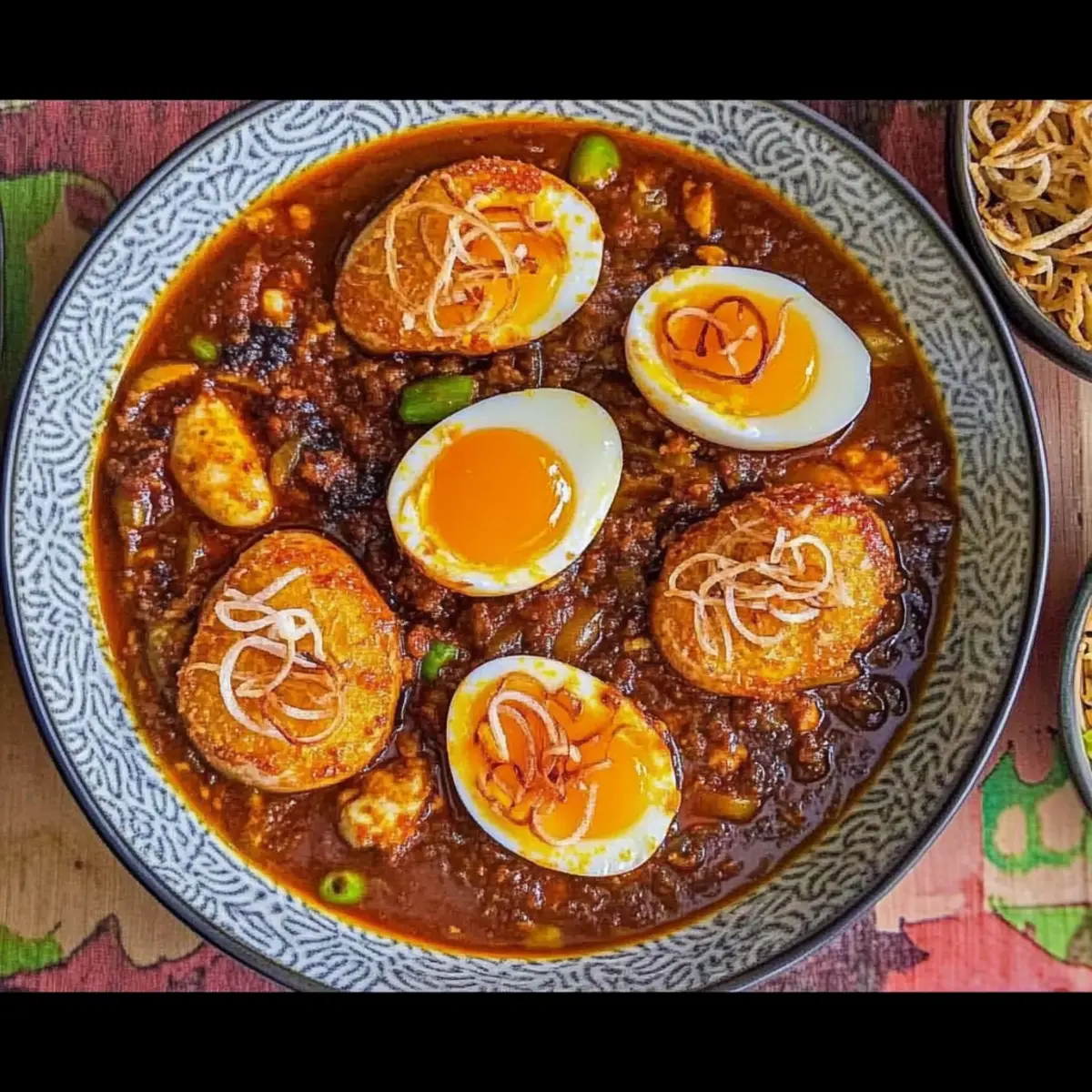
As the sun rises over bustling streets in Myanmar, the aroma of sizzling shallots and spices wafts through the air, calling all to breakfast. That’s the magic of Traditional Burmese Egg Curry, a dish that has been a beloved morning staple in many homes. With its perfectly boiled eggs crisped to a golden perfection and a luscious, spicy tomato gravy that warms your soul, this recipe offers a delightful escape from the ordinary. Not only is it gluten-free, but it’s also a quick, hearty meal that can make anyone forget the allure of fast food. Imagine gathering around the table with loved ones, digging into a flavor-packed bowl of curry served over fluffy rice. Are you ready to bring a taste of Myanmar into your kitchen? Let’s dive into this vibrant journey together!
Why is Burmese Egg Curry a Breakfast Delight?
Delicious Comfort: Burmese Egg Curry offers a unique twist on breakfast, combining the rich flavors of spices and tomatoes that elevate your morning routine.
Quick to Prepare: This dish is perfect for busy mornings, coming together in just about 30 minutes—no need to sacrifice flavor for time!
Gluten-Free Goodness: Not only is this recipe gluten-free, but it’s also packed with protein from the eggs, making it a nutritious choice for everyone at the table.
Versatile and Fun: You can easily customize this curry by substituting proteins or adding your favorite veggies, just like in my Sweet Potato Egg recipe.
Cultural Flair: Enjoying this dish is more than just a meal; it’s a chance to experience Burmese culture at breakfast, bringing friends and family together around vibrant flavors.
Get ready to enjoy this delicious blend of taste and tradition that might just leave you craving more!
Burmese Egg Curry Ingredients
- For the Curry
• Large Eggs – The main ingredient, providing protein and texture. Duck eggs can be substituted for larger yolks; adjust boiling time accordingly.
• Peanut Oil or Raw Sesame Oil – Cooking oil for frying and flavor enhancement. Substitute with vegetable oil if needed, but it will alter the taste.
• Turmeric – Adds color and a subtle earthy flavor. Essential for frying the shallots to a beautiful golden hue.
• Red Shallots – Provide sweetness and depth to the curry. Can substitute with yellow onions if unavailable.
• Minced Garlic – Enhances the flavor profile. Use garlic powder in a pinch, but fresh is recommended for best taste.
• Chili Powder – Adds heat to the dish. Adjust the quantity based on spice preference.
• Dried Ginger Powder – Offers warming spice notes. Fresh ginger can be used instead, but adjust the quantity as needed.
• Curry Powder – A unique spice blend necessary for authentic flavor. Commercial curry powder can be used, but homemade blends might enhance depth.
• Roma Tomatoes – Provide acidity and balance to the curry. Substitute with regular tomatoes, but adjust cooking time for water content.
• Tinned Crushed Tomato – Adds moisture and richness to the sauce. Fresh tomatoes can be used instead if canned are not available.
• Fish Sauce – Adds umami and saltiness. Soy sauce can be used for a vegetarian alternative, but the flavor will differ.
• Ground Dried Shrimp – Adds umami flavor and texture. Omit for a vegetarian version; however, consider adding mushrooms for texture.
Feel free to gather your ingredients and let’s embark on this flavorful journey of making a delightful Burmese Egg Curry!
Step‑by‑Step Instructions for Burmese Egg Curry
Step 1: Boil the Eggs
Begin by bringing a pot of water to a gentle boil. Carefully add the large eggs and let them cook for about 6 minutes for a soft center. Once the time is up, transfer the eggs into an ice bath for several minutes to stop the cooking process. This will ensure they peel easily and have a tender yolk, ready to be incorporated into your Burmese Egg Curry.
Step 2: Prepare the Shallots
In a wok, heat about 1/4 cup of peanut oil or raw sesame oil over medium heat. Once hot, stir in 1 teaspoon of turmeric, letting it infuse the oil, and then add the thinly sliced red shallots. Fry them until they turn golden brown and crispy, stirring occasionally to prevent burning. Once done, drain the shallots on paper towels, leaving the infused oil for the next steps of the Burmese Egg Curry.
Step 3: Cook the Curry Base
In a smaller pan, add the remaining oil from the wok and heat it over medium heat. Toss in some whole shallots and fry until they become translucent, which should take about 3-4 minutes. After that, stir in minced garlic, dried ginger powder, chili powder, and curry powder. Allow the mixture to cook for about 2-3 minutes, releasing aromatic scents as the spices bloom and mix together beautifully.
Step 4: Create the Sauce
Next, introduce the Roma tomatoes and tinned crushed tomatoes to the fragrant spices in the pan. Stir well, and add a splash of fish sauce to enhance the umami flavor. Let the sauce simmer for about 10 minutes, stirring occasionally, until it thickens and the tomatoes break down, creating a luscious base for your Burmese Egg Curry.
Step 5: Incorporate the Eggs
Carefully halve the boiled eggs, putting them yolk-side up in the simmering sauce. Gently nestle them among the thick curry to soak up all the vibrant flavors. Add a splash of water if the sauce is too thick. Allow everything to simmer together for an additional 5 minutes, giving the eggs time to absorb the rich tastes of the curry.
Step 6: Final Touches
Finally, taste and adjust the seasoning as needed, optimizing the balance of flavors in your Burmese Egg Curry. Before serving, garnish with the crispy fried shallots and any remaining dried shrimp for a delightful crunch. Enjoy your aromatic curry warm, served with fluffy rice, to fully experience the heartwarming essence of this dish!
How to Store and Freeze Burmese Egg Curry
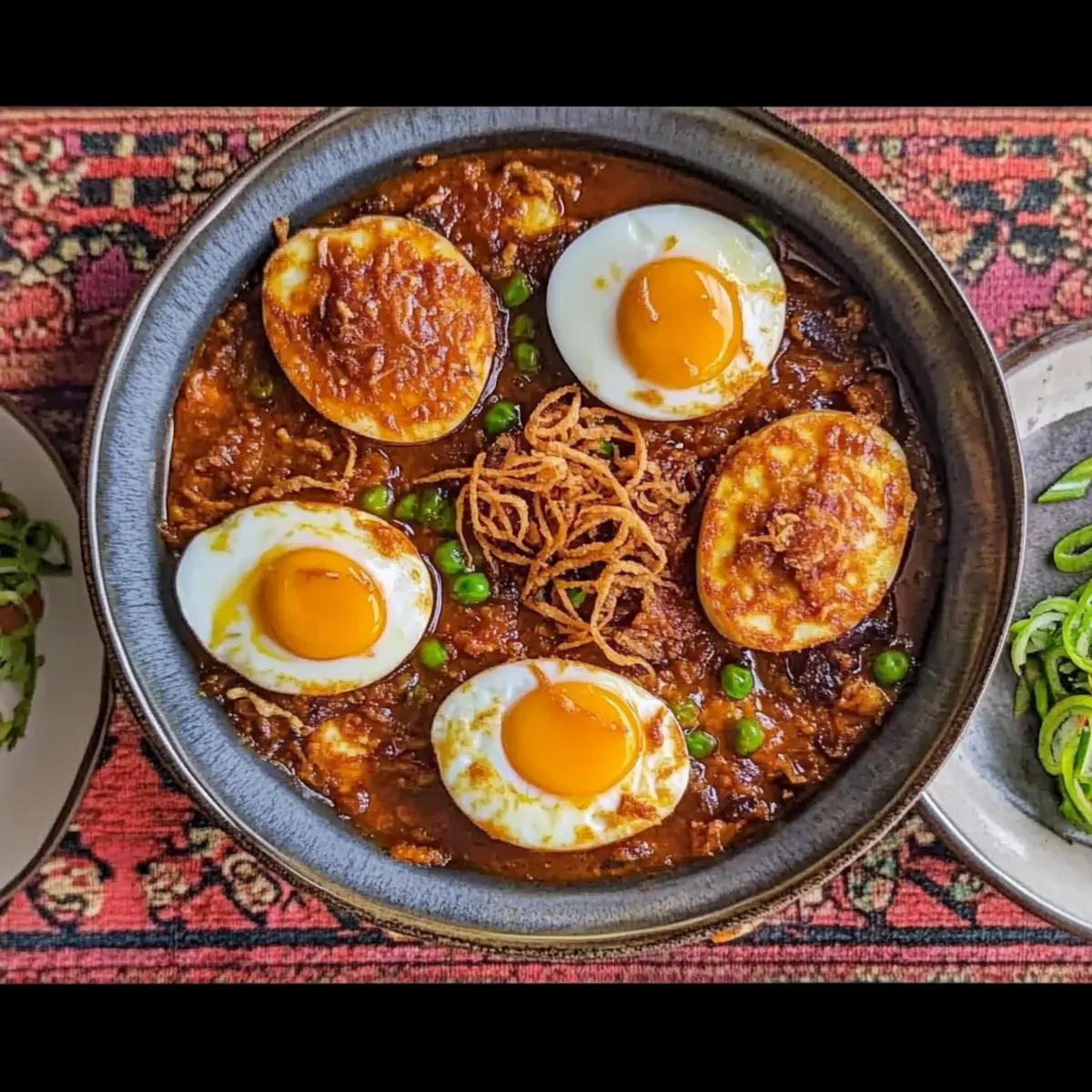
Fridge: Store leftover Burmese Egg Curry in an airtight container for up to 2 days. Reheat gently on the stove, adding a splash of water if the sauce thickens.
Freezer: For longer storage, freeze the curry for up to 3 months. Use a freezer-safe container, leaving space for expansion, and thaw in the fridge before reheating.
Reheating: To enjoy, reheat your thawed Burmese Egg Curry on medium heat, stirring occasionally until warmed through for the best texture and flavor.
Serving: Pair with freshly cooked rice after reheating for a satisfying meal that brings back those delightful flavors!
Expert Tips for Burmese Egg Curry
-
Egg Boiling: Ensure eggs are boiled gently for exactly 6 minutes for creamy, soft yolks. Undercooking can lead to runny centers; overcooking will yield hard yolks.
-
Oil Balance: Traditional Burmese Egg Curry is known for its slightly oily texture. Adjust the oil according to preference, but don’t skimp too much for authenticity.
-
Fresh Spices: Use fresh spices whenever possible; they significantly enhance the flavor. Consider grinding whole spices for a deeper aroma and taste.
-
Customize Your Dish: Feel free to modify the recipe by adding your favorite veggies—like bell peppers or peas—to boost nutrition while maintaining the essence of Burmese Egg Curry.
-
Consistent Seasoning: Always taste and adjust the seasoning as the curry simmers. This ensures a well-balanced and flavorful sauce that’s just right for you.
What to Serve with Traditional Burmese Egg Curry
Indulge in the warmth and vibrancy of a complete meal that celebrates flavor and comfort.
- Steamed Jasmine Rice: This fluffy, aromatic rice soaks up the rich curry sauce beautifully, offering a pleasant balance to the dish.
- Crispy Paratha: A flaky and buttery flatbread adds texture, perfect for scooping up the flavorful sauce and enjoying every bite.
- Fresh Cucumber Salad: Crisp cucumbers dressed in lime juice and salt bring a refreshing contrast to the savory curry, cleansing the palate between bites.
- Spicy Pickled Vegetables: A tangy and spicy side that elevates the meal with bold flavors, providing a delightful crunch alongside the curry.
- Chili Lime Wedges: A touch of zesty lime enhances the curry’s flavors, while additional chili offers an extra kick for those who crave heat.
Pairing these sides with Burmese Egg Curry not only enhances the meal but creates a festive atmosphere at the table, rounding out an unforgettable dining experience.
Burmese Egg Curry Variations
Feel free to get creative with your Burmese Egg Curry and tailor it to your taste buds!
-
Duck Eggs: Opt for duck eggs for a richer yolk flavor. Just remember to adjust the boiling time accordingly!
-
Protein Swap: Use chicken or tofu instead of eggs for different protein options. Both variations pack a delightful flavor punch and add a unique twist.
-
Veggie Boost: Add colorful veggies like bell peppers, snap peas, or spinach to enhance the dish’s nutritional profile. They’ll add a fresh crunch that harmonizes beautifully with the spices.
-
Spice it Up: Craving some extra heat? Try adding fresh green chilies or a dash of cayenne pepper to kick the spice level up a notch, perfect for those who love a fiery curry!
-
Herbal Enhancement: Toss in fresh cilantro or Thai basil just before serving. This will brighten up your dish and add a lovely aromatic finish that’s simply irresistible.
-
Curry Powder Alternatives: Experiment with different curry powders or garam masala to create a unique flavor. Homemade blends can elevate the taste even more, just like in my Charred Eggplant Pasta recipe.
-
Creamy Twist: For a creamier curry, swirl in a bit of coconut milk at the end of cooking. It will balance the flavors while lending a luscious texture that’s downright delightful.
-
Tinned Tomatoes Variations: If you prefer a richer sauce, substitute the tinned crushed tomatoes with a homemade tomato puree. It offers a wonderful depth that complements the dish beautifully.
Let your culinary imagination run wild with these variations, and make this Burmese Egg Curry just the way you like it!
Make Ahead Options
These Traditional Burmese Egg Curry ingredients are perfect for making ahead, allowing you to enjoy this flavorful dish even on your busiest mornings! You can boil and peel the eggs up to 24 hours in advance and store them in the refrigerator; this will make them super easy to incorporate into the curry. Additionally, you can prepare the curry sauce by cooking the spices and tomatoes up to 3 days ahead. Simply refrigerate it and reheat gently on the stove before adding the egg halves. To maintain quality, store the sauce separately from the eggs until just before serving, ensuring that each bite remains as delicious and satisfying as when made fresh!
Burmese Egg Curry Recipe FAQs
What type of eggs are best for this recipe?
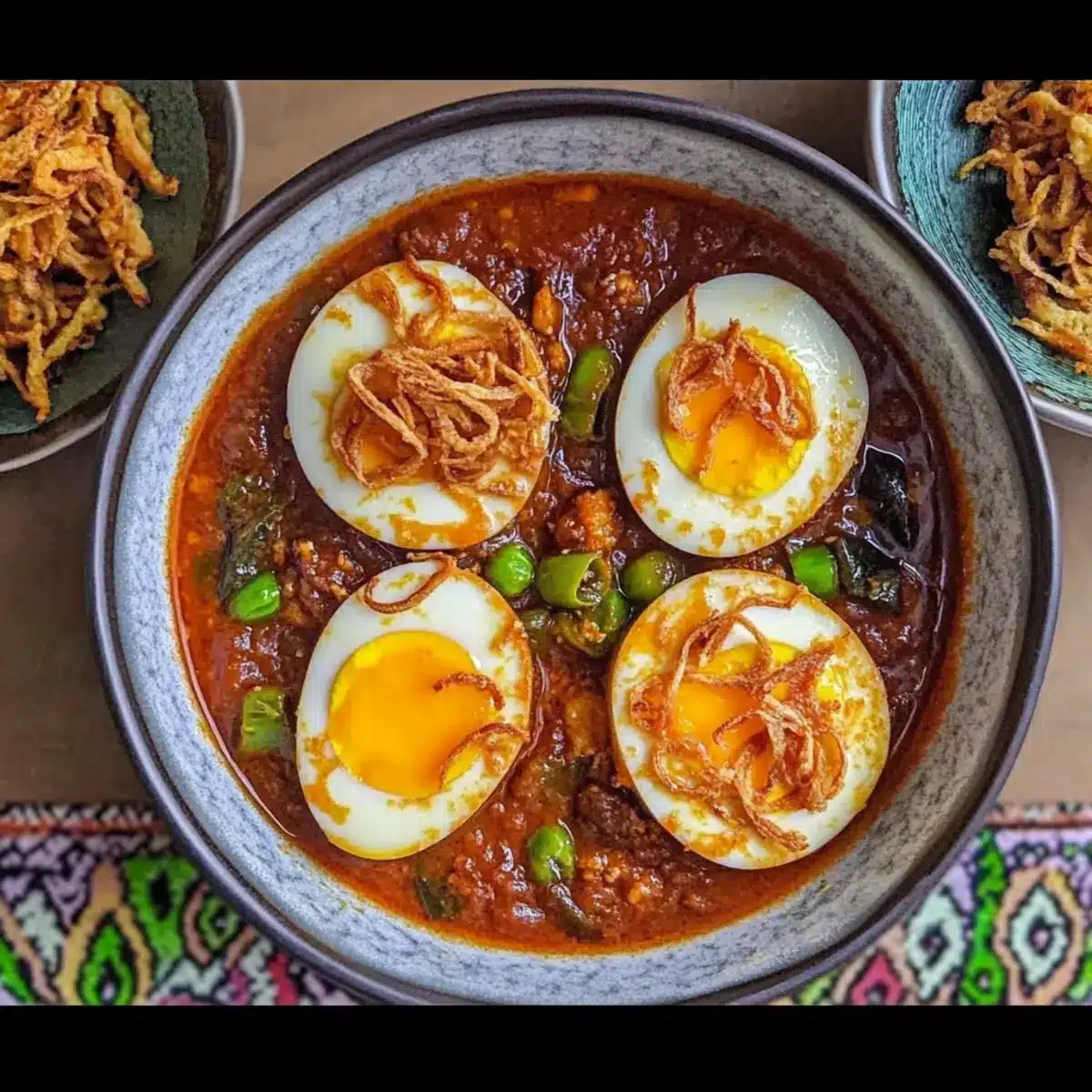
I recommend using large eggs for the traditional Burmese Egg Curry, as they provide a good balance of protein and texture. If you want a richer flavor, feel free to substitute duck eggs; just keep in mind that you may need to adjust the boiling time slightly, as they can take a bit longer to cook.
How long can I store leftover Burmese Egg Curry in the fridge?
You can store leftover Burmese Egg Curry in an airtight container in the refrigerator for up to 2 days. Be sure to reheat it gently on the stove, adding a splash of water if the sauce has thickened during storage.
Can I freeze Burmese Egg Curry?
Absolutely! To freeze your Burmese Egg Curry, use a freezer-safe container and pour the curry into it, leaving some space at the top for expansion. It can be frozen for up to 3 months. When you’re ready to enjoy it, simply thaw it in the fridge overnight and reheat on medium heat, stirring occasionally until warmed through.
What should I do if my sauce is too thick?
If you find that your curry sauce is too thick, you can easily adjust the consistency. Just stir in a little water or broth until you reach your desired thickness. Heat it gently while stirring to ensure everything blends well and remains flavorful.
Is this recipe suitable for those with allergies?
Yes, this Burmese Egg Curry recipe is naturally gluten-free. However, it does contain fish sauce, which some might want to avoid. For a vegetarian version, you can substitute soy sauce for fish sauce, just be aware that the flavor will differ slightly. Always check for any other specific allergens based on your dietary needs.
What are some substitute options for the spices used in this recipe?
If you’re missing any of the spices, there are alternatives you can consider. For instance, fresh ginger can replace dried ginger powder, and if you don’t have curry powder, you might try a mix of cumin, coriander, and turmeric to achieve a similar flavor profile. Adjust the quantities as needed, especially for the heat level in the chili powder.
Burmese Egg Curry: A Flavorful Start to Your Day
Ingredients
Equipment
Method
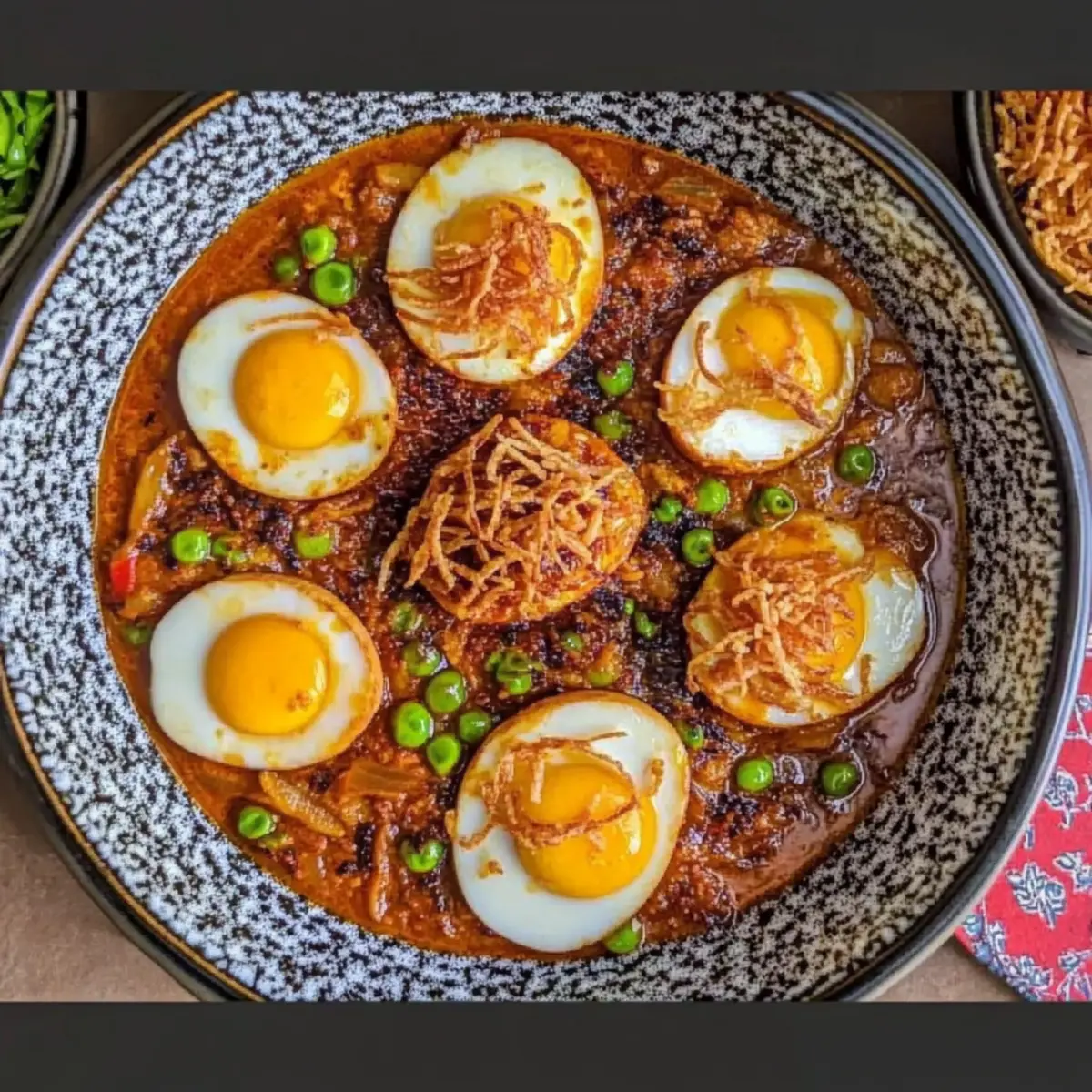
- Begin by bringing a pot of water to a gentle boil. Carefully add the large eggs and let them cook for about 6 minutes for a soft center.
- In a wok, heat about 1/4 cup of peanut oil or raw sesame oil over medium heat. Stir in 1 teaspoon of turmeric and add the thinly sliced red shallots, frying until golden brown and crispy.
- In a smaller pan, heat the remaining oil from the wok, fry whole shallots until translucent, then stir in minced garlic, dried ginger powder, chili powder, and curry powder. Cook for 2-3 minutes.
- Add the Roma tomatoes and tinned crushed tomatoes to the pan, stir well, and splash in the fish sauce. Simmer for 10 minutes until the sauce thickens.
- Halve the boiled eggs, placing them yolk-side up in the simmering sauce, and allow to simmer for an additional 5 minutes.
- Taste and adjust the seasoning, garnish with crispy fried shallots and remaining dried shrimp, and serve warm with fluffy rice.
Leave a Reply